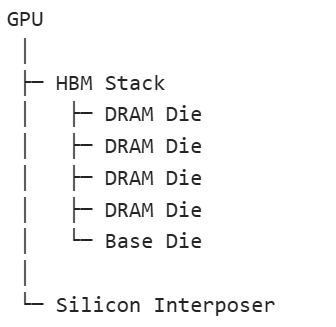
Recent reports suggesting that NVIDIA requested Samsung to use a TSMC 3nm process for the HBM4 base die have sparked debate among investors. While the news may initially appear negative for Samsung, the long-term implications are more nuanced.
From a short-term market perspective, investors may interpret this as a sign that NVIDIA has greater confidence in TSMC’s leading-edge logic technology than Samsung Foundry’s. Since the base die is becoming increasingly important in HBM4, outsourcing this component to TSMC could be viewed as a missed opportunity for Samsung’s foundry business. Such a perception may put temporary pressure on Samsung’s valuation, particularly regarding its foundry competitiveness.
However, focusing solely on the base die overlooks the bigger picture. The real value of HBM resides in the DRAM stack itself, including memory cell technology, TSV integration, hybrid bonding, packaging, and manufacturing yield. If Samsung remains a major supplier of HBM4 to NVIDIA, the majority of the value capture still resides within Samsung’s memory business.
More importantly, this development highlights a structural shift in the semiconductor industry. HBM4 is no longer just a memory product. It has become a combination of advanced DRAM, leading-edge logic, and advanced packaging. As AI accelerators continue to scale, memory vendors will increasingly need to optimize memory and logic together rather than independently.
For Samsung, the strategic question is not whether the base die is manufactured by Samsung or TSMC. The more important question is whether Samsung can secure meaningful HBM4 and future HBM5 market share. If Samsung successfully supplies next-generation HBM products to NVIDIA and other AI customers, the long-term revenue opportunity could far outweigh the loss of a portion of base-die content.
Therefore, while the market may react negatively in the short term, investors should focus on Samsung’s position in the rapidly growing AI memory ecosystem. In the end, winning the HBM platform matters far more than winning a single component within that platform.
최근 NVIDIA가 삼성전자에 HBM4용 베이스 다이를 TSMC 3nm 공정으로 제작할 것을 요구했다는 소식이 전해지면서 투자자들의 관심이 집중되고 있다. 표면적으로 보면 이는 삼성 파운드리 사업에 부정적인 뉴스로 해석될 수 있다. 세계 최대 AI 반도체 기업인 NVIDIA가 첨단 로직 공정에서 TSMC를 선호한다는 신호로 받아들여질 수 있기 때문이다.
그러나 투자자들은 보다 큰 그림을 볼 필요가 있다.
HBM4에서 베이스 다이의 중요성은 이전 세대보다 크게 증가하고 있다. 고속 PHY, 전력 관리, 신뢰성 기능 등이 포함되면서 단순 인터페이스 칩이 아닌 고성능 로직 칩으로 진화하고 있다. 따라서 최첨단 로직 공정이 요구되는 것은 자연스러운 흐름이다.
그렇다고 해서 삼성의 HBM 경쟁력이 약화된다고 단정하기는 어렵다. HBM의 핵심 가치는 여전히 DRAM 셀 기술, TSV 공정, 패키징 기술, 수율, 그리고 대량 생산 능력에 있다. 실제로 AI 시스템에서 고객이 원하는 것은 “누가 베이스 다이를 만들었는가”보다 “누가 안정적으로 고성능 HBM을 공급할 수 있는가”에 더 가깝다.
오히려 이번 사례는 HBM이 기존의 메모리 제품에서 메모리와 로직이 결합된 시스템 제품으로 진화하고 있음을 보여준다. 앞으로는 DRAM 기술뿐 아니라 로직 공정과 첨단 패키징을 포함한 통합 솔루션 경쟁이 더욱 중요해질 것이다.
따라서 단기적으로는 삼성 파운드리 경쟁력에 대한 우려가 주가에 부정적인 영향을 줄 수 있다. 그러나 장기적으로는 삼성이 NVIDIA의 HBM4 공급망에 성공적으로 진입하고 향후 HBM5 시장에서도 경쟁력을 확보한다면, 베이스 다이 생산 주체보다 HBM 플랫폼 공급자로서의 위치가 기업가치에 훨씬 더 큰 영향을 미칠 것으로 보인다.
결국 투자자들이 주목해야 할 것은 TSMC 3nm 적용 여부가 아니라, 삼성전자가 AI 시대의 핵심 메모리 공급자로 자리매김할 수 있는가 하는 점이다.